Playful Mess: The Handmade Font That Brings Joy to Every Design
There’s a special kind of energy that comes from something made by hand. You see it in the slight wobble of a hand-drawn letter, the uneven ink flow of a marker, the charming imperfection that digital perfection often lacks. This is the exact spirit captured in the Playful Mess font. It’s not just a typeface; it’s a burst of personality, a digital handshake that immediately communicates fun, creativity, and approachability. If you’ve ever struggled to find a font that feels genuinely human and full of character for your project, you’ve likely just found your new favorite tool.
More Than Just Letters: The Personality of a Display Font
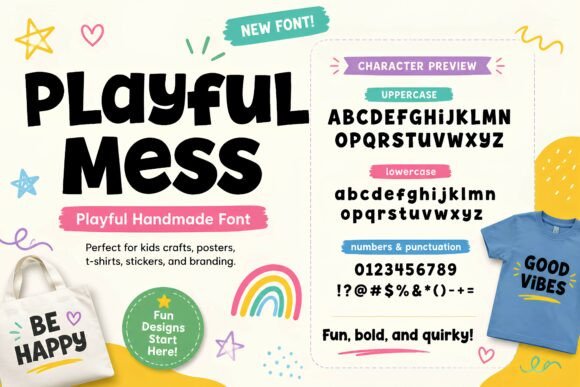
At its core, Playful Mess is a bold, quirky, and handmade display font. But let’s unpack what that means for your work. “Display” means it’s designed for impact, for headlines, logos, and short bursts of text where you want to make a strong visual statement. It’s not meant for body copy in a novel, but that’s by design. Its strength lies in its ability to grab attention instantly.
The “handmade” and “fun imperfect style” are its superpowers. In a world saturated with sleek, geometric sans serifs and pristine script fonts, Playful Mess offers a refreshing alternative. The letterforms have a tactile quality, as if someone just sketched them with a felt-tip pen or carved them out of clay. This inherent warmth makes designs feel more personal and less corporate. It’s a typeface with a cute, cheerful, and friendly personality, perfect for projects that need to feel accessible, joyful, and full of life.
Where This Quirky Typeface Truly Shines: Practical Applications
Theory is nice, but let’s talk about real-world use. Where does a font like this actually work? The answer might surprise you with its versatility, especially when you understand its role as a headline or accent font.
Branding & Logo Design: For businesses targeting families, children, or a creative, youthful audience, Playful Mess can become the cornerstone of a memorable brand identity. Imagine a bakery called “Sugar Sprinkles” with this font as its logo. It instantly tells customers they’re in for a fun, homemade treat. It works brilliantly for toy stores, craft studios, children’s apparel brands, and indie coffee shops that want a cozy, artisanal vibe.
Packaging & Product Design: On a shelf crowded with minimalist designs, a product using Playful Mess stands out. Use it for the product name on a bag of gourmet popcorn, a line of natural bath bombs, or a kids’ craft kit. It communicates joy and creativity before the customer even opens the package. It’s also perfect for sticker sheets, notebook covers, and gift tags.
Social Media & Digital Content: Your Instagram Stories, Pinterest pins, and TikTok graphics need to stop the scroll. Using Playful Mess for key phrases, sale announcements, or quotes adds an instant layer of engagement. It feels native to the platform—fun, expressive, and authentic. It’s excellent for creating cohesive Instagram highlight covers or bold YouTube thumbnails.
Physical Merchandise & Invitations: Think beyond the screen. This font shines on t-shirts, mugs, tote bags, and posters. It’s the kind of typeface that makes people smile. For event planners, it’s a dream for birthday party invitations, baby shower announcements, and school event flyers where a formal, serif font would feel completely out of place.
Pairing Playful Mess: Creating Visual Harmony
No font is an island. The true magic happens when you pair it thoughtfully. Because Playful Mess is so bold and expressive, it needs a partner that can balance it without competing.
- The Classic Companion: Pair it with a clean, simple sans serif font for body text. Fonts like Open Sans, Lato, or Montserrat provide a neutral, highly readable foundation that lets your headlines in Playful Mess pop. This is a foolproof combination for websites, blogs, and marketing materials.
- The Modern Mix: For a more sophisticated but still playful look, try it with a geometric serif font. The contrast between the organic, handwritten feel and the structured, traditional serif can be very striking. Use the serif for subheadings or pull quotes.
- The Double Whammy (Use with Caution): If you’re going for maximum personality, you could pair it with a simple script font. The key is to ensure they are different enough in weight and structure. This can work for very specific themes, like a whimsical wedding invite or a children’s book title page.
Always test your pairings in context. Does the combination work on a mobile screen? Is the hierarchy clear? The goal is visual consistency that guides the viewer’s eye effortlessly.
Smart Design Choices: Readability and Licensing
With a font this distinctive, two practical considerations come to the forefront: readability and licensing.
Readability is Key: Remember, it’s a display font. Its charm is in its details, which can get lost at small sizes. Use Playful Mess for headlines, titles, logos, and short calls-to-action. For any text that needs to be read easily at a smaller size—like product descriptions, blog post body, or contact information—always switch to your chosen companion sans serif or serif. This isn’t a limitation; it’s how you use the font effectively.
Understand Your License: Before you download any premium font, especially a commercial font like Playful Mess, scrutinize the license. Does it cover your intended use? Licenses typically vary for personal projects, small business use (with a revenue cap), and enterprise use. Ensure the license allows for the specific applications you have in mind, whether it’s for logo design, merchandise, or digital products. This is a non-negotiable step in professional design work.
Playful Mess is a powerful design asset that injects immediate personality and joy into a project. It’s a solution for anyone tired of sterile, overused fonts and looking to create a brand identity that feels genuinely human. By understanding its strengths, using it in the right contexts, and pairing it wisely, you can harness its quirky energy to make your designs more engaging, memorable, and fun. It’s a reminder that sometimes, the most effective communication isn’t perfect—it’s perfectly expressive.