Old Vintage Victorian: Infusing Projects with Timeless Character
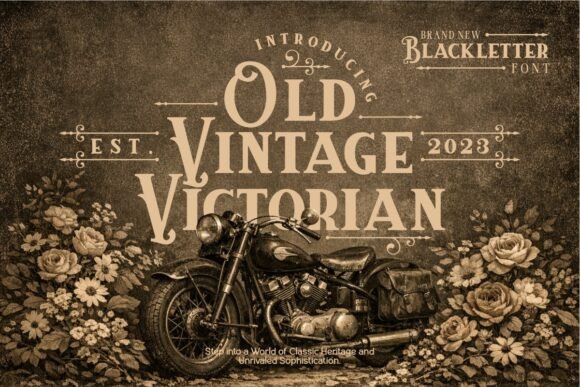
There’s a certain kind of magic in the swirl of an elegant serif and the confident weight of a well-drawn letterform. It’s a magic that can transport a viewer from a crowded social media feed to a quiet, gaslit study or from a plain product label to the window of a bespoke apothecary. This is the power of a typeface with a story, and it’s precisely the atmosphere conjured by Old Vintage Victorian, a premium font that doesn’t just communicate words but embodies an entire era of design.
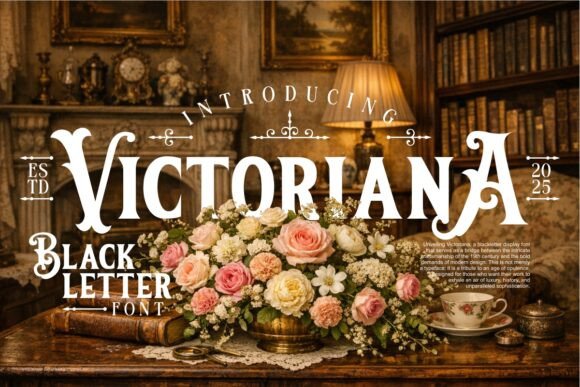
At its core, this typeface is a love letter to the Victorian period, a time when craftsmanship and ornamentation were paramount in everything from architecture to advertising. The font captures this essence through its intricate details—think subtle curves, decorative serifs, and a balanced sense of weight that feels both sturdy and graceful. It’s a display font at heart, meaning it’s designed to command attention at larger sizes, making it an ideal candidate for headlines, logos, and any application where first impressions are critical.
A Typeface for Storytellers and Brand Builders
For designers and entrepreneurs, choosing a font is a strategic decision. It’s not just about aesthetics; it’s about alignment. Old Vintage Victorian speaks a specific visual language: one of heritage, quality, and a touch of romantic nostalgia. This makes it a powerful tool for brands and projects that want to communicate these values.
Consider a small-batch candle company. Using this font on their packaging and website instantly tells a story of artisanal care and classic appeal, differentiating them from minimalist, modern competitors. A craft brewery might use it for a specialty ale label, suggesting a traditional recipe and careful brewing process. It’s about using typography to build an immediate, emotional connection with your audience, reinforcing your brand identity before they even read the first word of your copy.
Practical Applications: From Screen to Print
The versatility of a well-crafted serif font like this one is its greatest asset. Its application spans the entire creative and commercial landscape, adding a layer of sophistication wherever it’s used.
For Digital Presence: In web design and social media graphics, Old Vintage Victorian can serve as a striking headline font. Paired with a clean, highly readable sans-serif for body text, it creates a beautiful hierarchy that guides the viewer’s eye. Imagine a blog post about historical fiction or a Instagram graphic for a vintage furniture store—the font does half the storytelling work for you. It’s equally effective in email marketing headers, digital product covers, and online course branding.
For Physical Collateral: The font truly shines in print. Its detailed serifs and elegant structure reproduce beautifully on quality paper stock. Think wedding invitations, menu headers for a classic restaurant, product labels for gourmet goods, or signage for a boutique shop. It lends an air of professionalism and care to any printed material, making it feel more like a keepsake than a disposable flyer. For merchandise like tote bags or T-shirts, it offers a classic, wearable design that appeals to those with a taste for the historic.
Pairing and Readability: Making It Work
A common question with highly decorative fonts is how to use them without sacrificing readability. The key is understanding its role. Old Vintage Victorian is not meant for long paragraphs of body text; that’s the job of a workhorse serif or sans-serif font. Its purpose is to grab attention and set a tone.
The most effective strategy is to use it for headlines, subheadings, pull quotes, or single impactful words. Then, pair it with a simpler companion. A geometric sans-serif can create a compelling contrast, while a more traditional serif can offer a harmonious, layered look. Always test your font pairings in context. See how they interact on a mock-up of your website, a draft of your poster, or a sample of your packaging. Does the hierarchy feel clear? Is the main message instantly understandable? This testing phase is crucial for any design asset.
Choosing Your Style and Understanding Licensing
When exploring a premium font like this, take time to review all the included styles. Often, a font family will offer variations like regular, bold, italic, and sometimes even alternate character sets or swashes. These options provide flexibility, allowing you to maintain visual consistency across different elements of a project while adding subtle variety.
Equally important is understanding the commercial font licensing. For any project that moves beyond personal use—whether it’s for a client’s business, your own brand, merchandise for sale, or a digital product—you need to ensure you have the correct license. Reputable font foundries are clear about their terms, and respecting these terms is a fundamental part of professional practice. It protects the font designer’s work and ensures you can use the typeface with full confidence.
In the end, integrating a character-rich typeface like Old Vintage Victorian into your toolkit is about expanding your expressive range. It’s a specialized instrument, not a universal one. But for the right project, it can be the very element that transforms a good design into a memorable one, weaving a narrative of elegance and enduring style that resonates deeply with your intended audience.