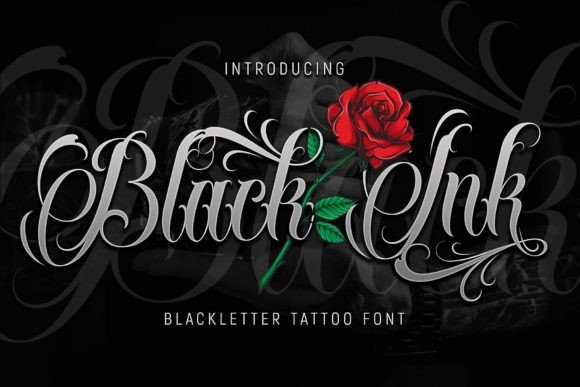
Black Ink: A Modern Blackletter Font for Bold Branding
There's a reason certain design elements endure for centuries—they carry weight, history, and an unmistakable presence. Blackletter typography, with its roots in medieval manuscripts, has experienced a powerful resurgence in contemporary design. But the ornate, heavy strokes of traditional blackletter can feel out of place in modern applications. Enter Black Ink, a contemporary blackletter tattoo font that bridges the gap between historical gravitas and clean, usable design. It's a typeface that commands attention without sacrificing clarity, making it a surprisingly versatile tool for anyone building a brand or crafting a visual message.
Understanding the Visual Personality
What sets Black Ink apart from other display fonts is its thoughtful balance. It retains the dramatic, angular strokes and high-contrast forms characteristic of blackletter, but it refines them. The letterforms are less ornate, avoiding the overly decorative swirls that can make traditional versions illegible at smaller sizes. This gives the font a sharp, almost tattoo-artist precision that feels both edgy and sophisticated. It's a premium font that doesn't scream "old-fashioned"; instead, it whispers "confident" and "distinct."
Think of it this way: if a classic serif font is a tailored suit and a sans serif font is a crisp button-down, Black Ink is a well-worn leather jacket. It brings instant personality and a sense of crafted authenticity. This makes it particularly effective for projects that need to stand out in a crowded visual landscape. It's a creative font with real character, perfect for logos, apparel graphics, and branding materials that aim for a bold, memorable impression.
Practical Applications Across Creative Projects
The true test of any design asset is its real-world application. Where does a font like Black Ink actually work? The answer might be broader than you first think.
- Brand Identity & Logo Design: For businesses in the creative, artisanal, or alternative spaces—a craft brewery, a barbershop, a record label, or a streetwear brand—this typeface can become the cornerstone of a visual identity. It immediately communicates a specific mood: authenticity, craftsmanship, and a touch of rebellion.
- Packaging & Merchandise: Imagine Black Ink on the label of a small-batch hot sauce, the sleeve of a vinyl record, or the tag on a handmade candle. It adds a layer of perceived value and intentionality. On merchandise like t-shirts, hats, and posters, it functions as a graphic element in its own right, creating designs people want to wear and display.
- Digital Presence: In the realm of web design and social media graphics, a bold headline set in Black Ink can stop the scroll. Use it for hero sections on a website, for impactful blog post titles, or as the primary font in a series of Instagram stories. It pairs exceptionally well with clean sans serif fonts for body text, creating a dynamic and readable hierarchy.
- Print & Editorial Layouts: Think event posters for a music festival, flyers for a gallery opening, or the cover of a niche magazine. This is where the font's poster-like quality shines. It brings an editorial edge to invitations for themed parties or weddings with a non-traditional vibe.
- Marketing Assets: From email headers to digital product covers and sale announcements, using Black Ink strategically can make your marketing materials feel more cohesive and professional. It helps build brand recognition by consistently applying a unique visual voice.
Making It Work: Pairing and Readability
A powerful display font demands a thoughtful partner. The key to using Black Ink effectively is contrast. Its dense, structured letterforms need breathing room. This is where font pairing becomes essential.
For most projects, you'll want to use Black Ink sparingly—think headlines, logos, and short, impactful phrases. Pair it with a highly legible, neutral sans serif font for paragraphs and smaller text. Fonts like Inter, Open Sans, or Lato provide a clean, modern counterpoint that ensures your message remains easy to read. Alternatively, for a different kind of contrast, a simple, elegant serif font can create a sophisticated and slightly unexpected combination. Always test your pairings at the actual size they'll be viewed to check for visual harmony.
Readability is paramount. While Black Ink is designed for clarity, it's still a display typeface. Avoid setting long sentences or body copy in it, especially at small sizes on screens. Its strength is in making a statement, not in conveying dense information. Use it to draw the eye, then let your paired font do the detailed work.
Licensing and Final Considerations
Before downloading any font for a commercial project, licensing is a non-negotiable step. Most premium fonts, including quality offerings like Black Ink, come with specific licensing agreements that dictate how they can be used—for personal projects, commercial work, in logos, on merchandise, or for web embedding. Always review the license to ensure it covers your intended use. This is a standard part of professional design workflow and protects both you and the font's creator.
Ultimately, choosing a typeface is about finding the right voice for your project. Black Ink offers a voice that is assertive, stylish, and deeply rooted in visual history, yet entirely relevant for today's design challenges. It’s not the right font for every job, but for the ones that call for character and confidence, it can be the perfect solution. Experiment with it on a mockup, see how it feels in context, and you might just find it’s the missing piece that brings your creative vision into sharp, memorable focus.