Injecting Pure Joy into Your Designs with Sweet Scribble
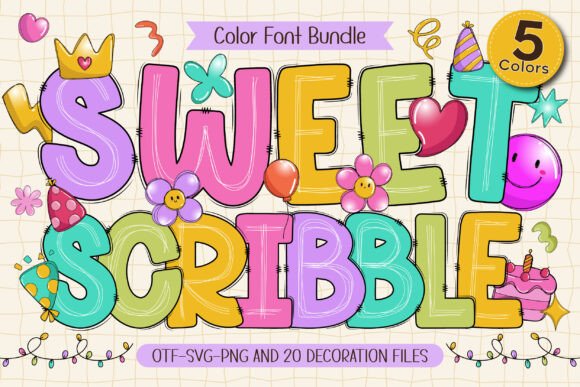
You know that feeling when you stumble upon a design element that just makes you smile? It’s rare to find typography that feels less like structured code and more like a burst of pure, unadulterated happiness. For those of us who spend our days crafting brand identities, designing social media assets, or building products for a family-friendly market, we often get bogged down in the seriousness of modern typography—clean sans serifs, authoritative serifs, and minimalist grids. But there are moments in design where you need to throw the rulebook out the window and embrace the chaos of a party. That is exactly the vibe you get when working with Sweet Scribble. It isn't just a typeface; it is an atmosphere. With its chunky, rounded letterforms and whimsical doodle-style texture, this font captures the messy, vibrant energy of a child’s imagination or a celebratory confetti pop. It’s the kind of creative font that instantly lowers the guard of the viewer, signaling that the content ahead is approachable, lighthearted, and full of personality.
The Power of Playful Typography in Brand Identity
When we talk about brand identity, we usually think of sleek logos and sophisticated color palettes. However, for a specific segment of the market—think bakeries, children’s clothing lines, toy manufacturers, or family-centric bloggers—approachability trumps sophistication. If your target audience includes parents, teachers, or children, your typography needs to speak their language. Sweet Scribble excels here because it breaks the rigid geometry of standard web design and print layouts. It introduces a human element, albeit a playful one.
Consider the psychology of the "chunky" letter. In typography theory, rounded and thick fonts are often perceived as friendlier and less aggressive than sharp, angular serifs. By utilizing a font that mimics the look of hand-drawn crayons or markers, you are subconsciously telling your customer, "We are safe, we are fun, and we don't take ourselves too seriously." This is vital for brands dealing with kids' products or party decor. When a parent sees a logo rendered in this style, they instantly understand the nature of the business without reading a single word of copy. It bridges the communication gap immediately through visual shorthand.
Practical Applications: From Packaging to Digital Assets
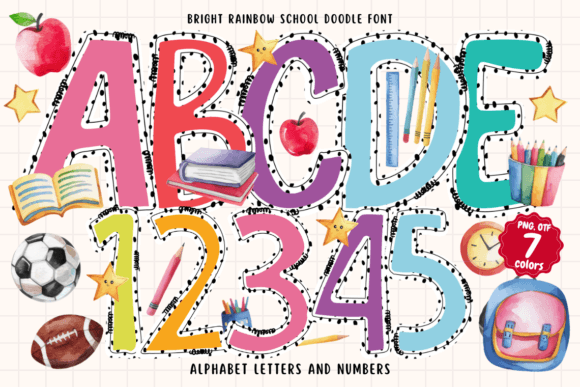
The versatility of a display font like this lies in its ability to adapt to various mediums while maintaining its core character. Because Sweet Scribble comes as a 5-color font, it offers a depth that standard monochromatic typography cannot. This feature is particularly useful in packaging design, where shelf appeal is everything. Imagine a box of cookies or a set of craft supplies; using a multi-colored font mimics the tactile experience of the product inside. It feels textured and premium, even if it’s digital.
For content creators and small business owners operating primarily online, the utility extends heavily into social media graphics. We all know the struggle of the Instagram feed—trying to stop the scroll. A standard post using a clean sans serif font might look professional, but it often blends into the noise. A bold header using a handwritten font style like Sweet Scribble, accompanied by the included doodle cliparts, creates an immediate visual hierarchy. It draws the eye to the headline, whether it’s announcing a sale, a new blog post, or a giveaway.
Furthermore, don't limit your thinking to just screen-based applications. This style of premium font is a powerhouse for physical merchandise. Think about the booming market of print-on-demand. Tote bags, t-shirts, and stickers aimed at the teacher market or the planner community often rely on typography that feels personal and "artsy." A font that looks hand-drawn translates beautifully to these substrates because it mimics the aesthetic of a handmade gift, adding perceived value to the item.
Maximizing Impact: Font Pairing and Hierarchy
One of the biggest mistakes I see with creative fonts is overuse. Sweet Scribble is a high-energy typeface. It is loud, colorful, and demands attention. If you use it for body copy in a long-form blog post or a brochure, you will likely fatigue your reader’s eyes. It is not designed for readability in dense paragraphs; it is designed for impact. Therefore, the golden rule of modern typography applies here: contrast is king.
To create a professional presentation, you need to balance this playful display font with something more grounded.
- Pairing with Sans Serifs: For a clean, modern look that feels organized yet fun, pair Sweet Scribble with a geometric sans serif font. The simplicity of the sans serif will allow the doodle-style headers to pop without the design feeling cluttered. This works exceptionally well for editorial design or magazine layouts targeting a youth demographic.
- Pairing with Serifs: If your brand has a "whimsical vintage" vibe, try pairing it with a soft serif font. The structure of the serif grounds the design, while the hand-drawn texture adds a layer of modern playfulness. This is a great combination for wedding invitations or boutique branding.
- Pairing with Script Fonts: Be careful here. Mixing two decorative fonts can be tricky. However, if you choose a very flowing, thin script font, the thick, blocky nature of Sweet Scribble can provide a nice structural contrast.
Always test your font pairings on different devices. What looks balanced on a large desktop monitor might look chaotic on a small mobile screen. Ensure that your hierarchy—Headline (Sweet Scribble) vs. Body (Standard Font)—is distinct enough that the user knows exactly where to look first.
Enhancing Projects with Integrated Design Assets
Typography rarely exists in a vacuum. We often need supporting graphics to flesh out a layout, and this is where many designers spend hours searching for stock vectors. The inclusion of 20 matching doodle cliparts with the Sweet Scribble typeface is a massive value-add for any design assets library. Consistency in style is crucial for brand recognition. There is nothing worse than finding a great font and then having to pair it with clipart that looks slightly "off" because the line weights or textures don't match.
Because these assets are designed to accompany the font, you can seamlessly integrate them into DIY projects, scrapbooking, or classroom materials. For a teacher creating a bulletin board or a parent designing a birthday invitation, having a cohesive set of graphics and typography means the project looks polished and intentional, rather than cobbled together. This level of cohesion elevates a hobbyist project to look like it was done by a professional graphic designer.
Technical Considerations for Commercial Use
Before you download and install any new typeface, especially one intended for commercial work, you must understand the licensing. When you find a font you love, the excitement can sometimes make us gloss over the fine print. However, if you are a small business owner selling products or a marketing professional working for clients, the distinction between a personal license and a commercial license is legally binding.
Ensure that the version of Sweet Scribble you acquire comes with a license that covers your specific needs. If you are using it for a client’s logo, the client technically needs to own the license, or your agency license must cover the end product. If you are selling merchandise (like t-shirts or mugs) with the font on it, verify that the license permits "embedding" or usage on physical goods for sale.
Additionally, since this is a multi-color font, check the file formats provided. You will likely need to use it in environments that support OpenType-SVG or COLR/CPAL formats, such as recent versions of Adobe Photoshop, Illustrator, or compatible web browsers. If you are using older software, the font might render as a standard black outline. Always test the readability of the colorful version against your chosen background colors to ensure accessibility standards are met, particularly if you are designing for digital platforms where contrast ratios matter.
Ultimately, adding a distinctive typeface like Sweet Scribble to your toolkit is about expanding your creative range. It provides a solution for those moments when a design needs to feel less like a corporate report and more like a celebration. Whether you are designing a logo for a new cupcake shop, creating assets for a school fundraiser, or just sprucing up your personal blog, having a font that radiates joy ensures your message isn't just read—it's felt.